Pass the Pork, Hold the Mistletoe: What Britain's Ancient Midwinter Tables Actually Held
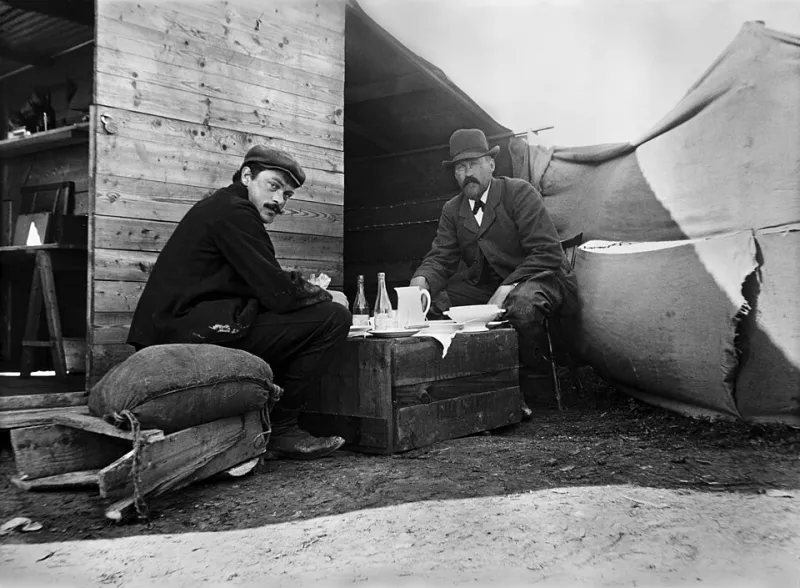
Photo: Kulturhistorisk museum, UiO (Museum of Cultural History, part of the University of Oslo, Norway), CC BY-SA 4.0, via Wikimedia Commons
Every December, the same article does the rounds. Christmas, it insists, is a pagan feast in a paper hat — nicked wholesale from Saturnalia, or Yule, or the worship of a sun god whose name escapes the person posting it. It's a tidy origin story. It is also, in most of its confident forms, not supported by the evidence.
The evidence we do have is stranger and, frankly, more appetising. It's in the animal bones piled in Neolithic ditches, the fatty crusts absorbed into pottery sherds, the fish sauce residue in amphorae dredged from a London riverbed. None of it was ever meant to be a Christmas dinner. All of it makes the British midwinter table look far more interesting than the turkey-and-brussels caricature allows.
Start with the pigs, because the pigs are loud
If you want to know what people ate in the darkest weeks of the year, you go to zooarchaeologists — the people who spend their careers reading age, sex and season of death out of a fragment of mandible. Their work is unglamorous and, in Britain, unusually revealing.
The headline site is Durrington Walls, the enormous later Neolithic settlement a short walk from Stonehenge. Excavations there produced staggering quantities of pig and cattle bone, and the pig age profiles are the interesting bit: a great many animals killed at roughly nine to ten months old. Pigs farrowed in spring hit that age around midwinter. Add the debris of huge, episodic gatherings and you get the reading most researchers now favour — large numbers of people coming together, bringing animals, and eating enormously, with a strong seasonal signature.
That's a genuinely remarkable thing: a midwinter feast in southern Britain around 2500 BC, on a scale that implies organisation, surplus and a lot of very tired cooks.
What it does not tell us is what anyone believed. Bones prove eating. They do not prove a festival of the returning sun, and archaeologists are rightly wary of turning a midden into a theology.
The menu, minus the nostalgia
Strip out anything that arrived in Britain after the sixteenth century and you're left with a plausible ancient midwinter spread: pork, beef, barley, oats, hazelnuts, some wild fruit, dairy from cattle and sheep. No potatoes, no sugar, no mince pies in the modern sense, no chocolate, and nothing you'd recognise as a sprout.
Pottery residues add the detail that bones miss. Lipid analysis on British Neolithic and Bronze Age vessels has repeatedly turned up dairy fats, and in some cases a mix of ingredients that looks like a deliberate composite — cereal, honey, plant matter — rather than a single foodstuff. Whether any of that constituted something you'd call beer, ale or a fermented honey drink is genuinely debated. Residue specialists can say a vessel once held something fermented and plant-rich. They cannot hand you the recipe, and anyone who does is improvising.
Bog butter deserves a paragraph of its own here, if only because it refuses to behave. Hundreds of kilograms of it have come out of British and Irish peat over the years, much of it buried in wooden vessels or wrapped in cloth. Explanations range from storage to offering to plain loss. It is the perfect symbol of this whole subject: a wonderfully tangible food deposit whose meaning is genuinely contested.
Saturnalia wasn't a template
Roman Britain does give us a midwinter party with a name, and it's the one everyone reaches for. Saturnalia — gift-giving, role reversals, gambling, a bit of licensed rudeness — was real, popular and thoroughly Roman. What it wasn't was a tidy pagan blueprint that a pope photocopied.
For a start, dates drifted around. For another, the fourth-century Roman world was crowded with winter observances, and early Christian communities chose dates for the Nativity on their own theological logic rather than by rifling through a pagan calendar. The borrowing argument has been dismantled so often by late antiquity specialists that it's become a slightly embarrassing uncle at the party.
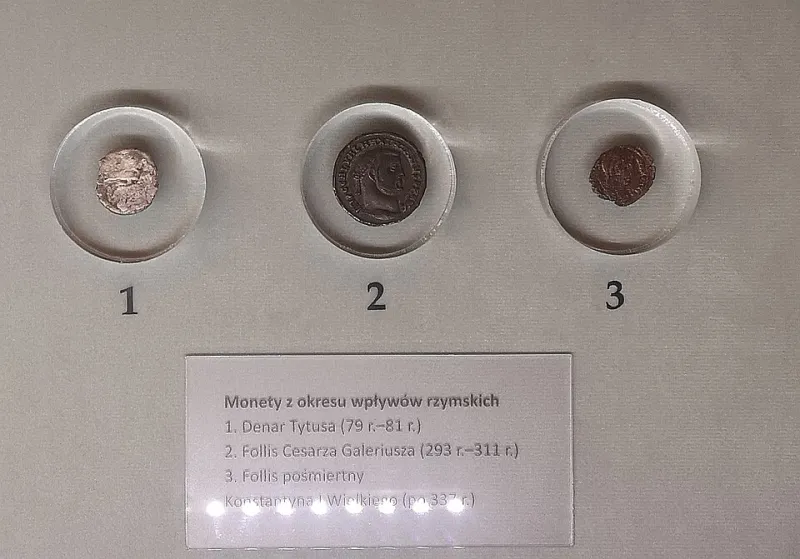
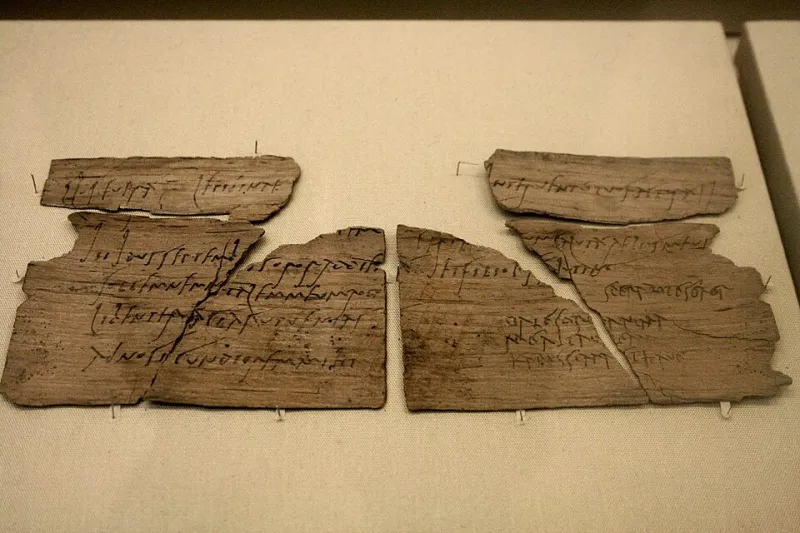
That doesn't make Roman Britain's midwinter dull. Excavations in London and at military sites have produced olive stones, fig pips, dates, pepper and amphorae that once held fish sauce — an entire imported larder dragged across Europe for people who could afford it. At forts like Vindolanda, the writing tablets conjure a world of dinner invitations, shopping lists and domestic logistics that feel startlingly familiar. Midwinter there was a question of supply, status and homesickness as much as festival.
What the solstice alignments actually say
Britain is packed with monuments that mark the turning of the year. At Maeshowe in Orkney, the passage is famously oriented towards the midwinter setting sun. At Stonehenge, the solstice axis is not a modern invention. These are real, deliberate alignments, and they tell us that the shortest days mattered enormously.
What they don't tell us is what was on the table, or whether the feast at one site had anything to do with the ceremony at another hundreds of miles away. Britain's midwinter was never one thing. A farming community in Wiltshire, a household on Hadrian's Wall and a chambered tomb in Orkney were all responding to the same dark weeks with wildly different resources and beliefs.
The boring explanation is often the best one
Here's the unromantic truth that gets left out of the 'ancient pagan Christmas' genre. Midwinter is when you kill animals, because you cannot feed them through the lean months. It's when you need calories most and have least. It's when you have time on your hands and a store to share or show off.
That combination — surplus, necessity and a lot of people under one roof — produces feasts anywhere in the world without anyone needing to invent a sun god. Status gets performed. Alliances get renewed. Grievances get aired. Somebody eats too much pork.
The differences between that and a modern British Christmas are mostly about logistics and refrigeration. The similarities — the cooking, the gathering, the slightly tense generosity — are the interesting part, and they don't need a myth to justify themselves.
So enjoy the bird. Just don't let anyone tell you with total certainty what your ancestors were thinking while they ate theirs.