The R-Word in the Trench: Why ‘Ritual’ Is British Archaeology’s Favourite Shortcut
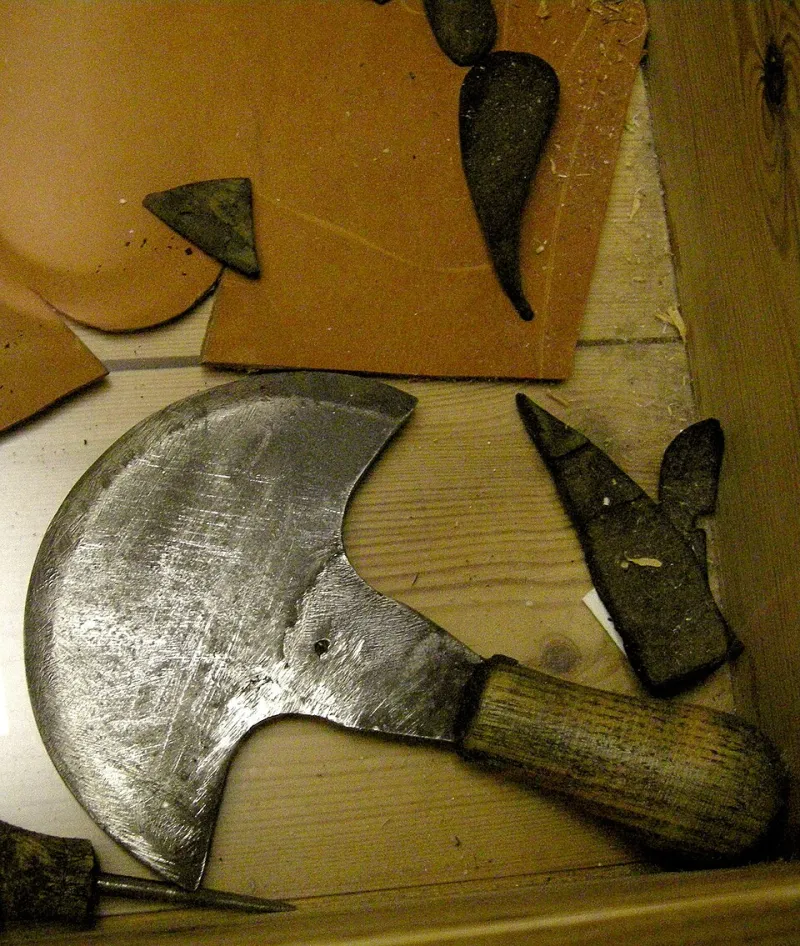
Photo: Linda Spashett (Storye book), CC BY 3.0, via Wikimedia Commons
Open almost any museum case in Britain and you’ll eventually meet a small label doing a lot of heavy lifting: ‘ritual deposit’. A shoe at the bottom of a Roman well. A cattle skull under an Iron Age floor. A handful of coins in a bathhouse drain. The object is odd, the context is damp or dark, and the word ‘ritual’ arrives like a taxi after closing time.
It is not that ritual is a silly idea. People in the past absolutely did things for religious, symbolic and social reasons, and some of those things left traces. The trouble is that ‘ritual’ is often used as a full stop when it should be a question mark. In British archaeology, it has become one of the most overworked labels in the toolkit — a shorthand that can sound more explanatory than it is.
What archaeologists actually mean by ritual
In technical terms, ritual is usually about patterned behaviour: actions that are repeated, formalised and carry meaning beyond the purely practical. A deposit might be called ritual if it looks deliberately placed, if it follows a repeated pattern, or if it involves objects or arrangements that don’t fit neatly into daily rubbish disposal.
That is a reasonable starting point. The problem is that intent is hard to dig up. Archaeology recovers things, layers and arrangements, not beliefs. We can see that a shoe was put in a well. We cannot see whether the person who dropped it was making an offering, losing a shoe on a muddy day, or chucking out a worn-out pair because the well had become a convenient hole.
So when an excavation report says ‘ritual’, it is often doing one of three things: describing a deposit that looks deliberate, suggesting a symbolic explanation, or admitting that the usual rubbish-and-loss explanations feel thin. Those are very different claims, and public labels rarely spell out which one is meant.
The ritual reflex in action
Take the Roman well shoe. Waterlogged wells are brilliant at preserving organic things that vanish elsewhere: leather, wood, rope, plant remains. That makes them archaeologically exciting and statistically misleading. If shoes survive in wells but not in dry rubbish pits, a pile of well shoes can look special when it may simply be a pile of well-preserved discards.
Then there are the animal bones under Iron Age floors. A neatly placed skull or jaw can look like a foundation deposit — a deliberate offering at the start of a building’s life. Sometimes it probably was. But roundhouses were also working buildings full of butchery, cooking, pests, children, dogs and general mess. Bones can end up under a floor through trample, dumping, backfill or later disturbance. A single skull is a prompt to investigate, not a verdict.
This is where ‘ritual’ becomes a reflex. Odd object plus strange context equals ritual. It is an understandable reflex, because the alternative is often ‘we don’t know’, which is less satisfying on a label. But ‘we don’t know’ is frequently the more honest starting point.
Three checks before you accept the label
First, look at context and stratigraphy. Was the object complete or broken? Was it placed carefully, or scattered through a layer? Is it a single lost item or part of a repeated arrangement? A worn pair of shoes at the bottom of a well might suggest accidental loss; a series of complete, unused objects placed at a boundary might push you towards deliberate deposition. The detail matters.
Second, think about preservation. Wells, bogs, ditches and drains are biased sampling machines. They keep organic things that dry sites destroy. A ‘ritual’ object may simply be an everyday object that happened to fall into a wet hole. Archaeologists call this taphonomy — the study of how things got into the ground and what happened afterwards. It is less glamorous than votive offerings, and far more important.
Third, ask about pattern. One shoe is an anecdote. Fifty shoes from fifty wells, with repeated positions and matching deposits, is a pattern that needs explaining. Comparanda — evidence from other sites — can turn a curious find into a regional practice, or deflate a dramatic claim. Good archaeology is often a matter of counting carefully and resisting the urge to make the first weird thing a headline.
Rubbish is not the opposite of ritual
One of the most useful correctives in recent British archaeology is the idea of structured deposition. It sounds jargon-heavy, but the basic point is simple: people do not just dump things randomly. They put them in particular places, at particular times, in particular ways. A deposit can be deliberate without being religious. It can be meaningful without being a sacrifice. It can be rubbish and still be structured.
That blurs the tidy opposition between ‘ritual’ and ‘rubbish’. A pot smashed into a ditch might be everyday waste, a boundary marker, a hospitality gesture, or all three depending on context. The better question is not ‘ritual or rubbish?’ but ‘what kind of deliberate action produced this pattern, and what else was going on here?’
How to read a museum label more sceptically
Museum labels are compressed by necessity. They have to fit a lot into a small space, and ‘ritual’ is a useful shorthand when the full argument runs to three pages of an excavation report. But shorthand can harden into fact. If a label says ‘ritual deposit’ without qualification, look for the evidence behind it. Does it mention repeated patterns, unusual objects, careful placement, or just an odd find in a wet hole?
Excavation reports are worth a similar read. Check whether ‘ritual’ appears in the results or only in the discussion. Look at the context, the finds and the formation processes. A report that says a deposit was ‘possibly associated with ritual activity’ is hedging. A report that says ‘this was a votive offering’ and then explains the comparanda is making an argument. The difference is not pedantry; it is the difference between a claim and a guess.
Why the R-word matters
Calling something ritual can close down interpretation. It can make past people look uniformly superstitious, and it can stop us asking practical questions about rubbish, loss, craft, trade and daily life. That does British archaeology a disservice, and it sells ancient people short. They were not living in a fog of mystery. They were getting on with their lives, and sometimes their lives involved meaningful deposits.
So keep ritual in the toolkit. Just don’t let it be the first tool out of the bag. A more honest label might read: ‘deliberate deposit; meaning uncertain’. It is less exciting than ‘ritual’, but it is a lot more archaeological.
Ancient News field guide, short version: when you see the R-word, ask what else it could be. Then ask what evidence would make ritual the stronger explanation. If the answer is ‘it looked a bit odd’, the label has done more work than the evidence.