The Ninth Legion Didn't Vanish in the Mist — Rome Just Filed It Away
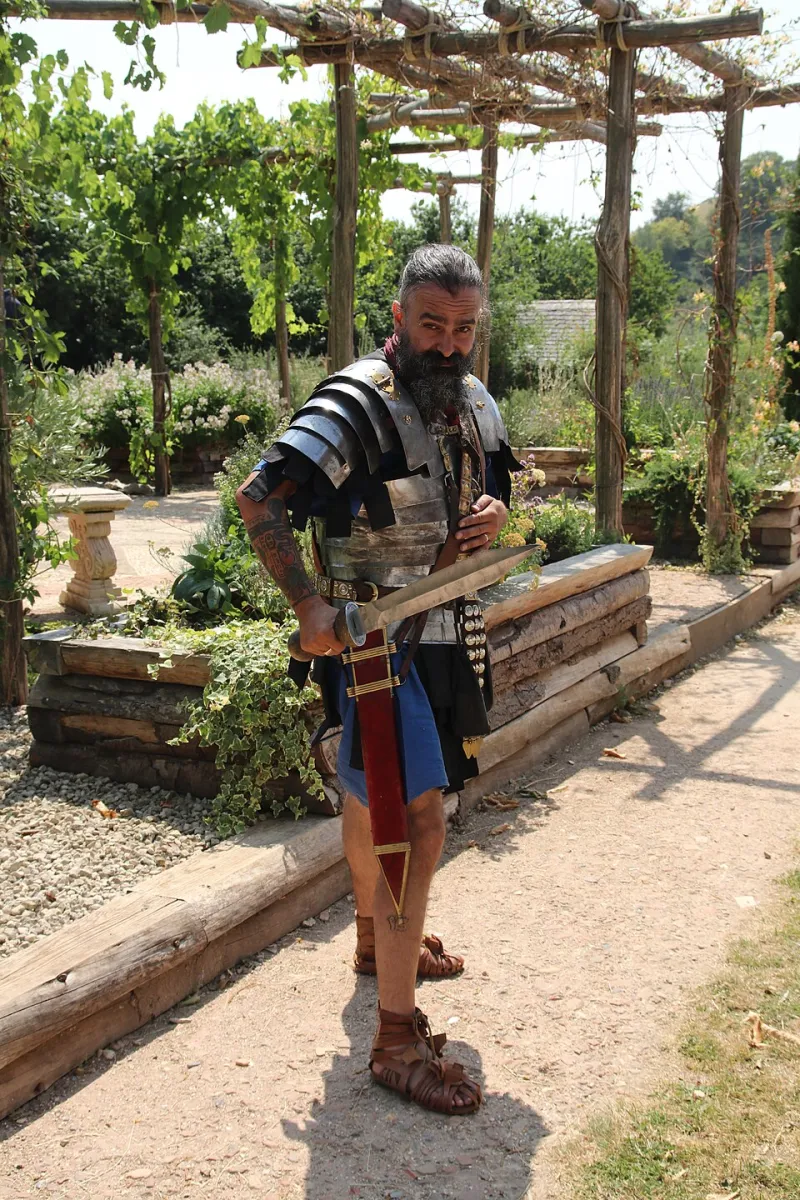
Photo: Tim Sheerman-Chase, CC BY 4.0, via Wikimedia Commons
There is a version of Roman Britain that exists almost entirely in mist. A column of legionaries tramps north into the Scottish gloom, the pipes fade, and several thousand men are never heard of again. No bodies. No eagles. Just heather, and an extremely good story.
That story has had a hell of a run. Rosemary Sutcliff's The Eagle of the Ninth sold it to a generation of British teenagers in 1954; the BBC serialised it in 1977; Hollywood had another go in 2011 with Channing Tatum looking mildly confused in Caledonia. Ask almost anyone in Britain what became of Legio IX Hispana and you'll get a variation on "they marched into Scotland and vanished."
The problem is that the Romans were obsessive administrators. They stamped their bricks, carved their building works into stone, and handed out bronze certificates on retirement. A whole legion does not simply slip out of a system like that without leaving a paper trail — and the trail it left doesn't lead into a fog. It leads into an office.
First, the bit the films skip
The Ninth Hispana was a genuine regiment with a long, well-documented career before Britain ever became interesting to it. It served in Spain, from which it took its name, and it was part of the invasion force of AD 43. It was stationed in Britain for the best part of a century.
It also suffered one of the worst defeats in Roman military history on British soil. In AD 60 or 61, during Boudica's revolt, the legion's infantry — roughly two thousand men — was caught in the open while marching to relieve Camulodunum, modern Colchester, and was wiped out. The legate, Quintus Petillius Cerialis, got away with the cavalry. It was the sort of catastrophe that ought to end a unit.
It didn't. Rome poured in replacements, and within a few years the Ninth was back on the rolls. Keep that in your pocket, because it's the most useful fact in this entire argument: a legion could lose the overwhelming majority of its men and still be issuing orders a decade later. The institution was not the soldiers.
What the Ninth actually left behind
The evidence for the legion in Britain is unglamorous and, for that reason, convincing. Among the highlights:
- A building inscription from York (Eboracum), recording construction work carried out by the legion and dated to around AD 107–108. This is the last firmly datable appearance of the Ninth in Britain.
- Brick and tile stamps. Clay stamped LEG IX HISP — the legion's shorthand — baked hard and indestructible, turning up at York and at other sites. It's the Roman equivalent of a company logo on a pallet.
- Military diplomas. These bronze certificates, handed to auxiliary soldiers on discharge, list the units in service at a given moment. They are one of the best tools historians have for tracking which regiments existed, and roughly when.
Then the record goes quiet in Britain. When Hadrian's Wall was begun around AD 122, the garrisons we can identify are the Second, the Twentieth and the Sixth. No Ninth.
That silence is real. It is also just a silence — and conflating the two is where the myth does its work.
The trail heads to the Netherlands
Here's the part that rarely makes it into the documentaries. Stamped tiles of the Ninth have been found at Nijmegen, on the Rhine in the modern Netherlands, in contexts pointing to the early second century. That fits an entirely humdrum military reality: legions were posted, split, detached and shuffled around the empire constantly. A vexillatio — a detachment — could be sent hundreds of miles while the parent unit's paperwork caught up later, or never did.
A legion sent to the German frontier is not a mystery. It's a transfer.
Or possibly Judaea
There is a second candidate, and it's worth stating fairly. The Bar Kokhba revolt of AD 132–135 tore through Judaea and drew in troops from across the empire. Some scholars have argued that the Ninth was among the units sent east and destroyed there. The evidence is fragmentary and much argued over, and it may never be settled.
But notice what that theory has in common with the Dutch one: both involve administration. Both involve the legion being moved, deployed and recorded, not swallowed by weather.
Why the boring answer keeps winning
Several things count against the annihilation story.
For a start, no battlefield has ever been found. No mass grave, no concentration of legionary equipment, no eagle. Archaeologists have dug an awful lot of Scotland, and the ground has been reasonably forthcoming about other things.
Second, Roman records were mostly written on materials that rot. Papyrus, wooden writing tablets, leather — all gone unless charred or waterlogged. Bronze diplomas survive by luck. Whole legions drift out of the surviving evidence, and we do not assume each one died heroically; we assume the archive is patchy. It is.
Third, the Roman army merged, renamed and disbanded units as a matter of routine. A legion that loses its identity in an administrative reorganisation leaves exactly the trace you'd expect: none.
Where you can follow the trail yourself
You don't need a plane ticket. The Yorkshire Museum in York holds material from the fortress, and the Multangular Tower in the city's Museum Gardens sits on Roman foundations. The British Museum's collections include military diplomas — small, dull-looking bronzes that happen to be the backbone of Roman army chronology. And the Vindolanda tablets, on display in Northumberland, are the best possible reminder of how much of this story was written in ink on wood, and how astonishing it is that any of it survived at all.
Why we keep the fog
Because it's a better story. A vanished legion is a moral about empire, a warning about ambition, and a gift to novelists. It also flatters us a bit: something dreadful and unknowable happened here, in the far north, beyond the reach of Rome.
The Ninth Legion probably didn't die in a Scottish mist. It got posted, split up, absorbed into someone else's command, and eventually stopped turning up in the paperwork. For a Roman legion, that's a kind of death — just not a cinematic one.
The mist, on the whole, is doing a lot of heavy lifting.