A Round's Worth of Ruins: Seven Ancient Sites That Cost Less Than a Pint
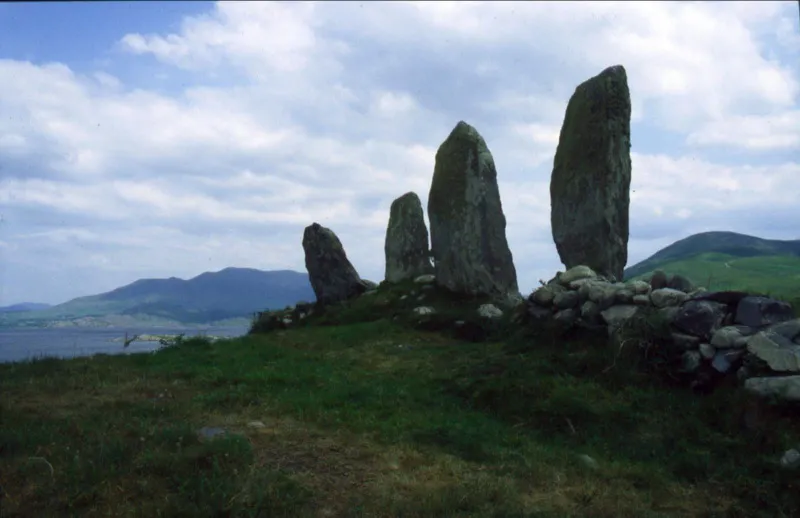
Photo: Bryan Ledgard, CC BY 2.0, via Wikimedia Commons
British heritage has a pricing problem. The marquee sites — the ones with the audio guides and the coach park — can set a family back the best part of eighty quid. Meanwhile, some of the most interesting things ever built in these islands sit at the end of a farm track behind a gate with an honesty box, and nobody goes.
So here's a modest proposal. Take the price of a pint (call it six quid, and try not to think about that too hard), spend it on a train instead, and go and look at something old. Seven suggestions, north to south, each with a visitor practical and one archaeological point that's worth more than the entry fee.
1. Jarlshof, Shetland
The damage: around £7 for adults, Historic Environment Scotland. Fine, it's a pint and a bag of crisps. Book ahead in summer; the site is a short drive or bus ride from Sumburgh.
What it quietly proves: that "ancient Britain" is not a thing — it's about four thousand years of things, stacked on top of each other. Jarlshof has late Bronze Age roundhouses, an Iron Age broch, a wheelhouse, a Norse longhouse complex and a medieval farm, all in one eroding mound beside the sea.
The takeaway that stings is the Norse bit. We tend to imagine the Viking Age as a hard reset — longships, fire, new beginning. Jarlshof shows Norse settlers moving into a landscape that was already ancient to them, reusing and adapting earlier structures. Continuity is less photogenic than pillage, but it's what the stratigraphy says.
2. Kilmartin Glen, Argyll
The damage: free. The museum in the village charges, the monuments don't. Parking at some of the sites is a couple of pounds.
What it quietly proves: that prehistoric rock art may not be "art" at all. Kilmartin has one of the densest concentrations of cup-and-ring markings in Britain, pecked into outcrops across a glen stuffed with cairns, standing stones and a linear cemetery running for over a mile.
We like to frame these marks as decoration or as ritual symbols. Increasingly the argument is about movement and territory — marks made along routes, at thresholds, in places people passed through repeatedly. The glen isn't a gallery. It's more like a very long, very slow conversation between people, animals, rock and dead ancestors.
3. Arbor Low, Derbyshire
The damage: free, with an honesty box on the farm track for parking. Bring boots; the approach is a proper Peak District squelch.
What it quietly proves: that stone circles are not observatories. Arbor Low is a henge — a bank and ditch enclosing a platform — with around fifty stones, every single one of them lying flat. The famous "recumbent" look isn't mysterious ancient design; the stones fell, and later generations left them where they lay.
Nor is there much to support the popular idea that circles were astronomical computers. Some alignments exist; the grand unified theory doesn't. What the bank and ditch at Arbor Low make clear is that the enclosure mattered more than the stones — the circle is a later insertion into an earthwork designed to separate inside from outside, and to make an impression on anyone approaching across the limestone.
4. Halliggye Fogou, Cornwall
The damage: free, English Heritage, open in daylight hours. Muddy, dark, and you'll want a torch. Not one for anyone who dislikes confined spaces.
What it quietly proves: that the fogou is not a hiding place. These strange underground passages — a curving tunnel with a side chamber, roofed with massive slabs — are found only in western Cornwall, and the popular story is that they were refuges, bolt-holes for people fleeing raiders, possibly Romans.
The dating and the architecture don't really support it. They were built in the Iron Age, some were used for centuries, and Halliggye's passage is large enough that it would be a fairly useless hiding place for a community. Storage — grain, dairy, valuables — plus a strong ritual element is the better bet. The darkness was probably the point.
5. Maiden Castle, Dorset
The damage: free entry, English Heritage. Summer parking charges apply. It's a steep climb and there's no shade, so pick your day.
What it quietly proves: that hillforts were not simply forts. Maiden Castle's ramparts are genuinely monumental — the largest Iron Age earthwork in Britain — but the interior was never packed with houses. It was a place for gatherings, storage, craft, ceremony and, for long periods, not very much at all.
The other thing worth knowing: the famous burial of around fifty people, long presented as evidence of a Roman massacre, is more complicated than the label suggests. Some of the wounds are consistent with violence, but the assemblage has been argued over for decades, and the site's Roman chapter ends not with slaughter but with a temple built inside the old ramparts. Conquest, it turns out, often looked more like redevelopment than apocalypse.
6. The Rollright Stones, Oxfordshire
The damage: about a pound or two in the honesty box. On the Oxfordshire–Warwickshire border, with a decent pub in the next village.
What it quietly proves: that folklore is a layer, not evidence. The story goes that a king and his army were turned to stone by a witch, and the three monument groups are duly named the King's Men, the King Stone and the Whispering Knights.
The archaeology is less tidy and much more interesting. The Whispering Knights are the remains of a Neolithic portal dolmen, several centuries older than the King's Men, which are a Bronze Age stone circle. Two monuments from different millennia, folded into one legend. Also worth knowing: the stones have been mutilated over the centuries by souvenir hunters and, in the nineteenth century, by people lighting fires against them. The "ancient" stones you see are partly a Victorian survival story.
7. The Roman amphitheatre, Guildhall Yard, London
The damage: free. It sits beneath Guildhall Yard in the City, viewable during office hours, with the Guildhall Art Gallery above.
What it quietly proves: that Roman Britain was urban, crowded and noisy. We picture villas and roads and tidy mosaics; London had an amphitheatre holding several thousand people, built around AD 70, with wooden stands on stone foundations and the classic arena layout you'd find at Pompeii.
Walking down the steps into the preserved curve of the arena wall is one of the oddest heritage experiences in Britain: a very Roman piece of mass entertainment, twenty feet below the City of London, surrounded by the offices of people who have no idea it's there.
Doing it cheaply, without being miserable
A few practical things. Free sites often have no toilets, no café and no staff — check opening hours before travelling, especially in winter. English Heritage and Historic Environment Scotland both run excellent free or low-cost sites alongside their headline attractions. Rock art should be photographed without touching; skin oils and boot soles do real damage. And if a site has an honesty box, pay it, because it's the cheapest heritage funding model going.
Above all, take the takeaway seriously. The reason these places are cheap is that they're not packaged for a story. There's no reconstructed roundhouse, no costumed interpreter, no gift shop selling a version of the past. Just the evidence, lying there, waiting to complicate whatever you thought you knew.