The Fire-Cracked Enigma: Reading Britain’s Burnt Mounds Without Pretending They’re Solved
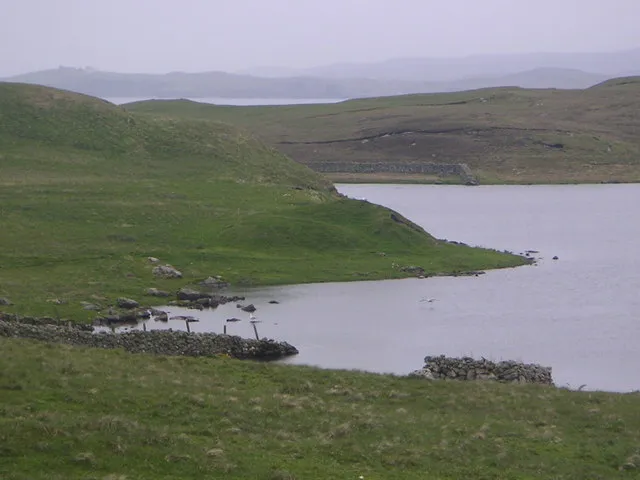
Photo: Robert Sandison, CC BY-SA 2.0, via Wikimedia Commons
Walk beside a stream in upland Britain and you might pass one without noticing: a low, crescent-shaped bank of reddish, cracked stones, maybe tufted with grass, maybe cut by a drainage ditch. It doesn’t look like a monument. It certainly doesn’t look like a headline. But that modest heap may be one of the most common prehistoric sites in the British landscape — and one of the least understood.
These are burnt mounds, and they are having a moment. Or rather, they keep having small moments, usually when a developer-funded excavation records another one before a road or housing estate arrives, or when someone on social media declares that a pile of fire-cracked rock proves prehistoric Britain was running a sauna-and-brewery complex. The truth is more interesting, and considerably less tidy.
A mound is not a mystery box
The basic ingredients are simple. Burnt mounds are accumulations of heat-shattered stone, charcoal, ash and sometimes soil, often found near streams, springs or wet ground. Many have a trough — a pit, sometimes lined with wood or stone — and many show repeated use over time. In Ireland they are known as fulachtaí fia, a term that has stuck in archaeology even though its traditional translation as “cooking places of the wild” is more assumption than fact.
They are not rare. Thousands have been recorded across Britain and Ireland, with particularly dense spreads in Scotland, Ireland, Wales and upland parts of England. Most date to the Bronze Age, though some are earlier or later. They are the kind of archaeology that rarely makes a museum display: no gold, no mosaic, no dramatic skeleton. Just stone that has been heated, cracked and dumped, again and again.
That ordinariness is exactly why they matter. Burnt mounds are evidence of people doing something with fire, water and stone in the same places over long periods. The question is what.
What the evidence actually supports
We can say some things with confidence. People heated stones in fires and then used them in or near water. The stones cracked from thermal shock, and the debris built up. Troughs held water, and experiments have shown that hot stones can raise the temperature of a trough considerably. Charcoal, plant remains and occasionally fats or other residues have been found at some sites.
That is a solid foundation. It is also a broad one. A trough of hot water can be used for cooking, but it can also be used for bathing, washing, softening plant fibres, dyeing, brewing, or a dozen other tasks. Some burnt mounds have produced evidence that nudges towards one activity or another; many have produced almost nothing diagnostic at all. Preservation is patchy, and the main deposit — cracked stone — is not a receipt.
This is where the popular stories get ahead of the evidence. A burnt mound with a trough is not automatically a sauna. It is not automatically a prehistoric pub. It is not automatically a ritual site, either, although ritual is often used as a catch-all when we run out of practical ideas. The honest position is that burnt mounds were probably not one thing. They may have been a technique as much as a place: a way of using hot stones and water that different communities adapted for different reasons.
The sauna problem — and the stew problem
Two interpretations dominate the popular imagination. The first is the sauna: a small structure over a trough, steam, relaxation, perhaps a prehistoric wellness culture. The second is the cookery site: hot stones in a trough, meat wrapped in something, a communal feast. Both are plausible in principle. Neither is proven by a cracked stone and a damp hollow.
Some burnt mounds do have associated structures, and some troughs are more elaborate than others. But to argue for a sauna, you would want more than a heat source and water. You would want evidence of a enclosed space, how it was used, how people moved around it, and ideally something that distinguishes bathing from cooking or processing. To argue for a specialised cooking site, you would want residues, butchery evidence, or a pattern of plant remains that fits. Often we have some of these clues, but not enough to close the case.
The better question is not “was this a sauna or a kitchen?” but “what else was happening here?” Burnt mounds are often near water and wet ground, which may have been important for practical reasons, symbolic reasons, or both. They are also often in places that were used repeatedly, which suggests tradition and memory as well as convenience. The archaeology is not failing to give us a single answer. It may be telling us that there never was one.
Why they get overlooked
Burnt mounds suffer from a visibility problem. They are low, subtle and often in places that are awkward to visit: wet pastures, forestry edges, upland valleys, development sites. They do not photograph like a stone circle. They do not have a helpful name like “Arthur’s Seat” or “The Devil’s Quoits”. And because they are made of ordinary material, they can be damaged by ploughing, drainage, track-building or forestry before anyone notices.
That is why developer-funded archaeology matters so much here. Many burnt mounds enter the record only because a pipeline, road or housing scheme triggered a survey. County historic environment records hold thousands of entries, but the quality of information varies. Some sites are scheduled monuments and legally protected; many are not. The result is a category of archaeology that is simultaneously widespread and vulnerable, familiar to specialists and almost invisible to the public.
There is also a storytelling problem. Burnt mounds do not fit neatly into the “lost civilisation” mode of popular history. They are not a single dramatic event. They are the accumulated debris of ordinary labour: gathering stone, building fires, heating water, repeating. That should be a strength, not a weakness. It is archaeology of everyday life, and everyday life is where most people actually lived.
How to recognise one without jumping to conclusions
If you think you have found a burnt mound, look for a low mound or crescent of reddish, angular stones, often with dark charcoal-rich soil, close to a stream, spring or boggy ground. A trough may show as a hollow or a patch of different fill. But do not assume every patch of burnt stone is a burnt mound. Hearths, kilns, industrial waste and modern field drains can all leave burnt material in the ground.
And please do not dig it up. In the UK, excavation and metal detecting on scheduled monuments are illegal without permission, and even on unprotected sites the responsible move is to record and report. Note the grid reference, take photographs with a scale, describe what you see, and contact your local historic environment record or a county archaeologist. If you are unsure, ask. A burnt mound is not a treasure hoard, but it is a finite piece of evidence.
The most useful thing you can do is resist the urge to solve it in a sentence. “Prehistoric sauna” makes a good headline. “A place where people repeatedly heated stones and water, for reasons that may have varied over centuries” is clunkier, but it is closer to the truth. Burnt mounds are not a riddle with one missing answer. They are a record of choices, habits and routines that we are still learning to read.
So next time you pass a low, red-stoned mound beside a stream, don’t look for a single label. Look for the repetition: the fires, the water, the cracked stone, the generations who came back. The mystery is not that nobody can explain them. The point is that they ask us to explain carefully — and to be comfortable with an answer that stays open.