Cavities, Cereal and Chemical Passports: Reading Ancient Britain Through Its Teeth
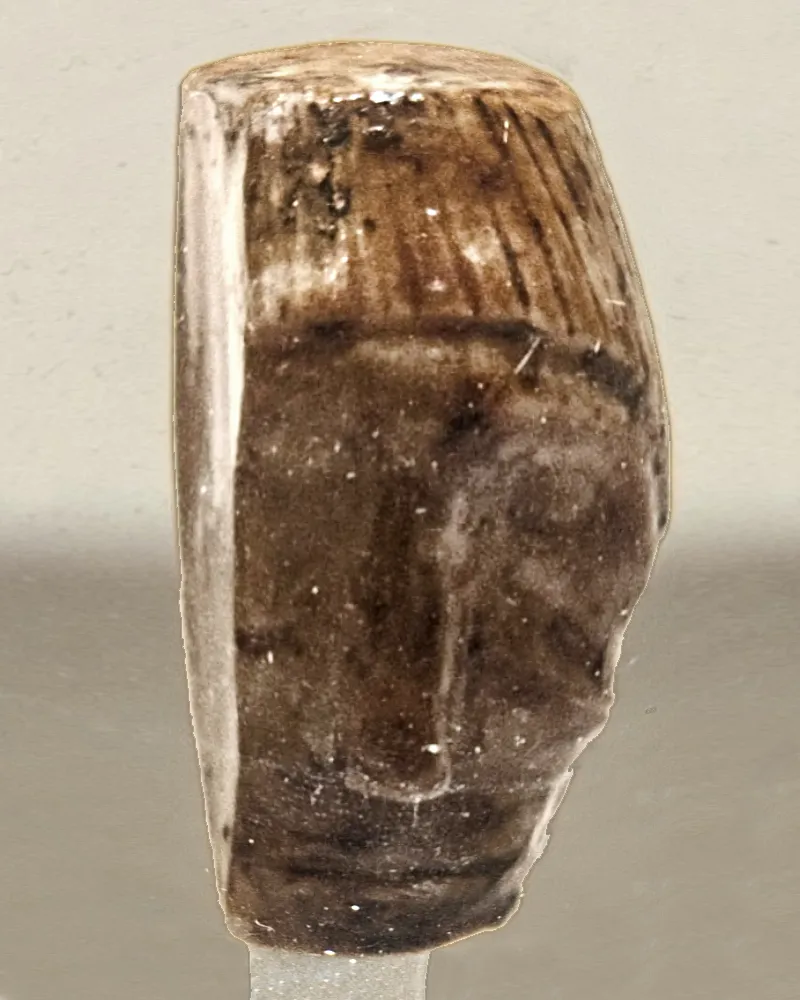
Photo: Kcx36, CC BY-SA 4.0, via Wikimedia Commons
Teeth are the bits of the skeleton most of us try not to think about. They are also, archaeologically speaking, one of the most talkative. A worn molar from a Bronze Age grave or a Roman cemetery in York can carry traces of what someone ate, how often they were ill, where they grew up and whether they moved across the country later in life. Forget the idea of a single dramatic skeleton; sometimes the real story is in the mouth.
The mouth is a filing cabinet
Enamel is tough. It has to be. It is also formed during childhood and then barely changes, which makes it a kind of biological diary written in mineral. Dentine underneath grows in layers, a bit like tree rings, and can record stress, diet and illness over years. Add plaque — the hardened calculus that builds up on teeth — and you have a surface that traps food fragments, pollen, starch grains, bacteria and even DNA.
That is why teeth are so useful for ancient Britain. They survive well in the ground, they are often recovered from excavations, and they sit at the crossroads of diet, health and movement. A tooth is not just a body part. It is a small, stubborn archive.
Plaque: the original food diary
Dental calculus is having a moment. Researchers have learned to tease out microscopic remains from the hardened plaque of people who lived thousands of years ago. Starch grains can point to cereals and roots. Plant fibres and phytoliths can hint at coarse, gritty foods. Proteins and ancient DNA can sometimes identify specific plants or animals.
This is where the popular picture of ancient meals often goes wrong. The cliché is a grim slog of tough meat and bad bread, with the occasional heroic swig of ale. The reality was more varied and more interesting. People in ancient Britain ate what was available, what was valued and what could be stored. That might mean cereal products, wild plants, nuts, berries, fish, meat, dairy or honey, depending on period, region and status. Honey was not an everyday staple for everyone, and coarse bread was not the only thing on the menu.
Plaque also records the less glamorous side of dinner: bits of grit from grinding stones, particles from cooking, and the bacteria that feasted alongside their human hosts. It is not a perfect menu. It is a set of clues, and the best interpretations use several lines of evidence together.
Isotopes: chemical passports
If plaque is the food diary, isotopes are more like a chemical passport. Elements such as strontium, oxygen, carbon and nitrogen leave signatures in teeth and bone that reflect where a person lived and what they ate. Strontium and oxygen are especially useful for questions of movement, because their ratios vary with local geology and climate. Carbon and nitrogen can help with diet, including the balance of plant and animal foods.
This does not mean archaeologists can pin someone to a village postcode. Isotopes are broader than that. But they can show that a person buried in one place may have spent their childhood somewhere else. In Britain, that has been used to explore mobility in periods from the Neolithic to the early medieval world. Some individuals look local. Others do not. Some arrived as children. Some moved later. Some may have travelled short distances across a geological boundary that looks dramatic in the data but modest on the ground.
The key is caution. A non-local isotope signature is not proof of a dramatic long-distance journey. It is a prompt: keep looking. Combine it with grave goods, burial practice, ancient DNA and historical context, and the picture gets sharper.
Disease, stress and the bad years
Teeth also record hardship. Enamel defects can form when a child is seriously ill, malnourished or stressed. Because enamel does not remodel, those defects stay put. Dentine layers can show periods of disrupted growth. Cavities and abscesses tell us about pain and infection. Wear patterns can hint at how teeth were used, though not always in the simple ways people expect.
This is where ancient teeth become intimate. A person who survived a difficult childhood may carry the evidence in a tooth decades later. A farmer with a gritty diet might show heavy wear. Someone living in a crowded settlement might have oral bacteria that speak to infection and close living conditions. None of this is a full biography, but it is a surprisingly human trace.
The migration question
Migration is one of the most politically charged topics in archaeology, and teeth have been drawn into the argument. Ancient DNA from teeth and bone has transformed what we can say about population movement in ancient Britain, especially in periods such as the Roman era and the early Middle Ages. But teeth on their own do not tell a simple story of invasion or replacement. They record individuals, families and communities, and people move for all sorts of reasons: marriage, work, trade, slavery, pilgrimage, warfare or curiosity.
That is why the best work avoids turning every non-local tooth into a headline about mass migration. A single chemical outlier is a question, not a verdict. The interesting research asks who moved, when, and how that fit into the wider society.
The myth of the uniformly grim diet
There is a stubborn idea that ancient life was nasty, brutish and short, and that ancient teeth prove it. Bad teeth did exist. Painful abscesses were real. Childhood stress was real. But a grim diet for everyone is a myth. Ancient British communities were not all eating the same thing, and they were not all suffering in the same way. Coastal groups might have relied heavily on marine foods. Farming communities had different risks and different rewards. Wealthy households and ordinary ones did not sit down to identical meals. Even within one cemetery, teeth can show variety.
That variety is the story. It makes the past less like a cautionary tale and more like a complicated human world.
What this means for museums
All this raises an awkward question for museums. Human remains are displayed in Britain and elsewhere, and teeth are often treated as less confronting than skulls or complete skeletons. But they are still human tissue. They still come from someone. Good display now tends to explain what the science can and cannot say, avoid sensational claims, and treat remains with context and respect. Teeth can be a brilliant way into that conversation because they are familiar, slightly weird and scientifically rich.
So next time you see a case of ancient jaws and molars, do not just look away. Those small, worn objects may be carrying a food diary, a medical record and a travel history all at once. Ancient Britain was not one diet or one people. Its teeth know that better than most of us.