What the Peat Giveth, the Drain Taketh Away: Britain’s Bog Bodies Are Running Out of Time
Britain’s bog bodies have a branding problem. They get wheeled out as ghoulish time capsules — leathery faces, rope marks, a whiff of sacrifice — and then tucked back into museum cases as if the hard part is over. It isn’t. Some of the country’s most extraordinary ancient human remains are also some of its most vulnerable, and the threats to them are not just dramatic tales of ancient violence. They are drainage ditches, dry summers and the awkward question of what a museum should do with a person’s preserved head.
Peat Is Not a Pickle Jar
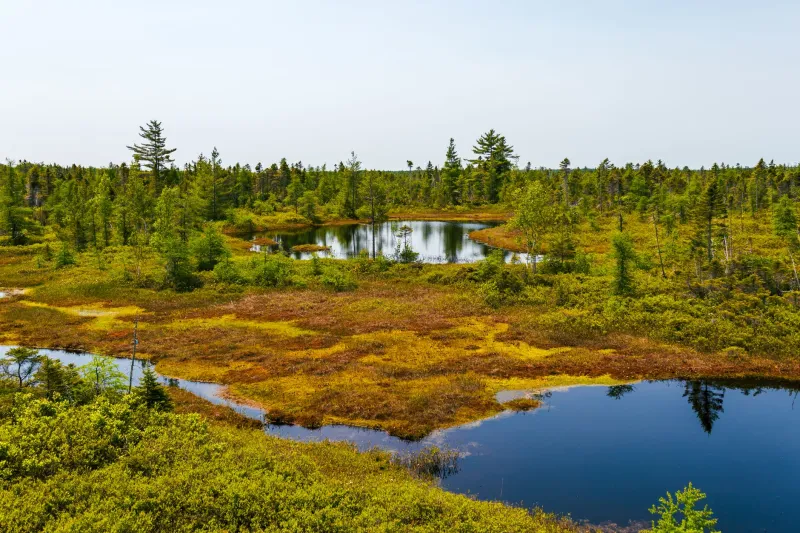
A bog body is not a photograph from the past. It is a chemical accident that happened to stay legible. Peat preserves human tissue because waterlogged, acidic, low-oxygen conditions slow decay and tan the skin. Sphagnum moss helps, too, creating an environment that can hold hair, nails, stomach contents and even the folds of a face for thousands of years.
That is remarkable. It is also misleading. Peat does not press pause on biology forever. It creates a narrow, unstable equilibrium. Lindow Man, found at Lindow Moss in Cheshire in 1984, survived because the peat was wet and airless enough for long enough. Worsley Man, a head found at Chat Moss near Manchester in 1958, tells a similar story of rare preservation. These are not normal burials. They are exceptions that depend on a very particular environment staying very particular.
And that is the first myth to bust: a bog body is not a finished museum object. It is an archive that can still decay, shrink, crack and lose information long after it has been lifted from the peat.
The Drainage Problem
Britain’s lowland peats have been drained, cut and converted for centuries. Peat extraction, agriculture, forestry and development all lower the water table. When peat dries, oxygen gets in, microbes wake up and the whole deposit begins to oxidise and shrink. A body that was safe in wet peat can be exposed to the air, or to fluctuating conditions that are almost as bad.
Lindow Man’s discovery was tied to commercial peat working at Lindow Moss. That is not just a historical footnote. It is a reminder that many bog bodies arrive in museums because the place that preserved them was being changed. Today, climate change adds another pressure: hotter, drier summers and drought can drop water tables in peatlands that are already stressed. The result is a slow emergency. A body can go from ‘preserved’ to ‘at risk’ without anyone digging it up.
This is why archaeologists talk about in-situ preservation — keeping remains in the ground under controlled conditions — as well as excavation. It sounds sensible, and it often is. But it is not simple. You need long-term monitoring, reliable water levels, landowner cooperation and money. A peat bog is not a display case. It is a living, breathing, draining landscape.
Museum Glass Isn’t a Force Field
Once a bog body is excavated, the conservation challenge changes but does not vanish. Museum storage and display require stable humidity and temperature. Older conservation treatments can age in unexpected ways. Research sampling, however careful, can be destructive. Every tiny piece taken for DNA, isotopes, gut contents or dating is a trade-off between future questions and present knowledge.
That is not an argument against research. Bog bodies have yielded extraordinary evidence about diet, disease, migration, violence and ritual in later prehistoric Britain. Lindow Man’s last meal, his parasites and his injuries have all been pored over. Worsley Man has been reassessed with modern methods. The point is that these are finite archives. You cannot re-sample a bog body indefinitely.
Museum displays add another layer. A climate-controlled case can protect a body, but it can also frame it. Is this a person, a specimen or a spectacle? Labels matter. So does lighting, positioning and the language used around the remains. The old ‘bog body as grim curiosity’ approach is not neutral. It shapes how visitors understand the past — and the dead.
Respect Is Not a PR Add-On
Debates about displaying human remains are often treated as a box-ticking exercise. In Britain, museum guidance and professional ethics encourage institutions to think carefully about dignity, consultation and context. Bog bodies are old enough that there is no simple descendant community to ask, but that does not make the ethical questions disappear. It makes them harder.
Display can be justified. Seeing a preserved person from Iron Age Britain can be profoundly powerful, and there is real public value in honest, well-interpreted remains. But display should not be the default simply because a body is dramatic. Museums need to explain what has been learned, what is uncertain, how the person is cared for and why they are on show. The same goes for research. ‘Because we can’ is not an ethics framework.
The casual tone around bog bodies — the jokes about leathery faces and grisly deaths — is not the problem in itself. Gallows humour is part of how people cope with the past. The problem is when the ghoulish framing replaces the archaeological one. These are not props. They are people who happened to survive through a quirk of chemistry, and they deserve better than being reduced to a macabre talking point.
What Would Actually Help
First, keep peat wet. Peatland restoration and water-table monitoring are not glamorous, but they are among the most effective ways to protect remains that are still in the ground. Second, monitor collections properly. Museums need stable conditions and long-term plans, not just a case and a caption. Third, be transparent about research. Publish what is sampled, why and what was learned. Fourth, treat display as a decision that needs justification, not an automatic right.
For the public, the practical advice is simple. If you find what looks like bone, leather or worked wood in peat, stop digging, note the location and contact your local museum or archaeological service. Do not try to rescue it yourself. A bog body’s worst day is usually the day it meets fresh air.
Britain’s bog bodies are not freaks of nature or frozen moments. They are rare, fragile archives of ancient lives, and they are still under pressure. The next Lindow Man may already be drying out in a peatland nobody is watching. The least ghoulish thing we can do is take that seriously.